CatholicJukebox.com
Visit Greenpeace.org to help prevent environmental destruction.

April 28, 2005

Requiem for Ray


 Posted by Hello

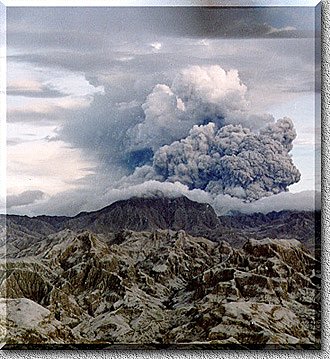
Today, Ray Punongbayan died after a PAF chopper he was on crashed somewhere in Nueva Ecija. He was probably the most famous volcanologist in recent memory and the explosion of Mt. Pinatubo (see picture) was one of the primary reasons he became famous.

He was intelligent and articulate but he was also passionate, to a fault, about his chosen field. He also cared very deeply about his country which you would discover after a 30 minute conversation with him. He was also an honest man and that is saying a lot for a man in government.

I had a chance to meet him when I defended him from a baseless graft charge filed by a subordinate who was after his post. Throughout 3 years of protracted litigation, I got to know the scientist, the man and the Filipino, Dr. Ray Punongbayan:a good man.

He retired from the office he held for 20 years, Director of PHIVOLCS, poor as a mouse but still dedicated and committed to serving his country. Until the date of his death, he lived in a rented apartment--a far cry from many government officials whose mansions sprout within the first years of their appointment.

Ray enjoyed many simple things. He had a great sense of humor and he could laugh at himself. He enjoyed good conversation and could imbibe spirits with the best of them. But the one thing I saw that he was really passionate about was his craft, his science. Once he toured me through the equipment at PHIVOLCS and his eyes were alit as he explained to me, practically a luddite when it came to volcanoes and the equipment in the room, patiently and very clearly what was going on. He was most excited when talking about PHIVOLCS, volcanoes, earthquakes, science and his country.

He retired with a graft conviction wrongfully imposed on him for a corruption that was so alien to him; yet that did not turn his mind from serving what appeared to be an ungrateful country. He poured himself into another realm of public service, serving as governor of the Red Cross--which is how he found himself on that chopper earlier today.

Ray was not a religious man; he did not speak of God often. He was also a man of science which does not lend itself easily to faith. Yet I know that Ray would appreciate that he is now with the Creator, He who made the volcanoes, the rocks and the nature he loved so much in life.

Goodbye Ray. Pacem en requiescat.

She put the GG in PCGG


She put the GG in PCGG Posted by Hello

Haydee Yorac both defies and surpasses all your expectations.

Her reputation as a tough, no-nonsense, intelligent and articulate lawyer precedes her; it is a reputation that is well-earned because she is all these. But she is also more than all these. Fiercely loyal to her good friends and comrades, intensely passionate about things she loves, compassionate for those who find themselves with the shorter end of the stick, Haydee Yorac's tough demeanor hides a heart that beats not only with nationalistic pride and fervor but great love for those who find themselves honored with her friendship.

Of all those appointed to head the Presidential Commission on Good Government (PCGG), she put the GG in PCGG. She will not be missed BY government; she will be missed IN government.

Ma'm Haydee,welcome back to the grind--may God hold a warm place in His heart for you.

April 22, 2005

SW3: Be very afraid of George Lucas

Read somewhere that SW3:ROTS (that's Starwars 3:Revenge of the Sith, in shorthand) has been pitched by George Lucas as an intergalactic "Titanic."

I am afraid, I am very afraid.

Of all the films Lucas could have alluded to, it would have to be "Titanic." Just when I had gotten over the monumental stupidity that was SW2:Send in the Clowns ("Anakin, how you've grown"-retch, barf, vomit), Lucas had to go and compare ROTS to "Titanic."

Screen writing is not Lucas's strong point--SW2:Send in the Clowns is a sterling example, SW1 is a close second (compare both to SW5:The Empire Strikes Back NOT written by Lucas and you will see the difference palpably). So when Lucas brags that ROTS is going to be another Titanic, I am afraid that the insipid love angle in that monumental waste of time and money passing itself off as a film is going to be carried over to what should have been the crowning glory of the SW trilogy.

Just when I was excited to see how the wookies come into the picture; just when I was excited to see how Anakin would turn to the dark side; just when I was excited to see the monumental battle between Anakin and Kenobi that the GREAT Sir Alec Guiness (THE Obi Wan Kenobi; though Ewan McGregor does a fantastic job of channeling Guiness and at the same time creating a totally absorbing younger Kenobi) alluded to in SW4:A Brave New Hope; just when I was excited to see how Samuel L. Jackson (totally underused in SW1 and SW2) would KICK BUTT--Lucas has to go and say that it's going to be a Titanic.

Now we're probably going to have to sit through lame, insipid,mushy, did I say lame already, dialogue between Anakin and Padme just so that the film can have the obligatory love angle which Lucas botched big time in SW2:Send in the Clowns. He could have totally excised the love angle from Send in the Clowns and the film would have rocked--but no, he had to put it in and he had to insist on writing it himself.
I hope Lucas comes to his senses and asks someone who knows writing, like Lawrence Kasdan, to come in and save this film from Lucas himself.

Old dog, new tricks

You really cannot teach an old dog new tricks.

The President has reportedly signed an Executive Order directing a National ID system--something the Supreme Court had already struck down as a violation of privacy a long time ago. What is more, the President refused to wait for Congress which is deliberating on an Anti-Terrorism Bill which would also contain provisions for a National ID system.

To mix metaphors, the National ID system is a big, fat, fastball waiting to be hit out of the park. Can't wait.

April 21, 2005

For whom the bell tolls

I almost went to sleep early.

Tuesday evening, while scanning the channels (GMA7, CNN, BBC and EWTN) monitoring the events at St. Peter's Square, I was about to switch the tv off when I heard Vicky Morales excitedly saying, live from the Vatican, that there was smoke from the chimney. Sure enough, there was.

But, it wasn't clear to Vicky because her vantage point was ground level at St. Peter's Square whether it was black or white; from where I sat watching the tv, it was WHITE and I wanted to scream at her, "hey, its white! We have a Pope!" But then, a few minutes after, it turned grayish and then white again. That led every commentator, including the very knowledgeable John Allen Jr. (his book, The Conclave, is very informative), to issue a cautionary notice. Then, very wisely, the priest on EWTN (very cool guy, I must say), intoned in his deep baritone that "we must thank John Paul II for this--his foresight in ordering the great bell at St. Peter's to toll if there is already a new Pope."

So, the eyes of the world, previously riveted to a smokestack, which was now literally smoking, turned to a great bell. Minutes crept by and as filler commentary poured in, the crowd at St. Peter's was already chanting, "Habemus Papam"; they knew, don't ask me how but they knew. About fifteen minutes after the smoke, while all eyes were on the great bell, I SAW IT MOVE even before it tolled! Then, bedlam ensued.

As the bell tolled, you could hear the crowd cheering and clapping. From where I sat, I texted friends whom I knew would still be awake (and a few that I was sure wouldn't mind being awakened) the two words that everyone had become familiar with over the past two weeks--"Habemus Papam!"

While speculation was rife over who it would be, I was almost sure that it would be Cardinal Ratzinger given the brevity of the conclave. There would be no surprises and the man who entered the Sistine Chapel a Pope came out as Benedict XVI.

As the bell continued to toll and the crowd continued to thicken, I said a short prayer for my new shepherd--"a lowly laborer in the vineyard of the Lord"--for his protection, for grace and blessing, for his health, and for wisdom and inspiration. But I also said a short prayer for me--his stubborn sheep, his obstinate lamb, his headstrong ward--that I would be able to trust in the wisdom of Our Father in Heaven and His Holy Spirit of Truth, that I would be able to transcend any intellectual disagreements with Pope Benedict's conservative edicts and believe, with all my heart, that God's wisdom will be made manifest in not only his choice of shepherd but also his selection of sheep.

I had many intellectual disagreements with John Paul II's pronouncements on a lot of things but never on matters of faith and belief; my intellectual disagreements, however, never detracted from nor diminished my respect and love for the man, John Paul The Great. And now the man behind a lot of John Paul II's pronouncements was now seated on his chair. I knew that, in the days to come if he proved true to his character and his principles, I would have the same intellectual disagreements with Benedict XVI. I took refuge, though, and found comfort in the knowledge that he was a choice made not by man but by God Himself, working through men, and that there is a divine wisdom, unfathomable to man, in his choice as shepherd to me. And, humbly, I accepted and I obeyed.

As the bell continued to toll at St. Peter's Square, I ended my prayer to the background of the cheering crowd and the tolling bell, lending my cheers to the crowd and knowing fully well for whom the bell tolled.

It tolled for me: tolling an end to my stubborness, my disobedience, my hubris and my pride.

It tolled for me: asking me to embrace wholeheartedly the faith that stretches unbroken two thousand and some years back.

It tolled for me: inviting me to put my trust in my new shepherd, the one whom God had burdened with the task of salvation, of conversion, of transformation.

And I said simply, Amen.

April 20, 2005

For two weeks, everyone was a Catholic

From the time John Paul II died until last night when Benedict XVI pronounced his blessing urbi et orbi, everyone was a catholic. The long queues said it all--it didn't matter that some people in line didn't believe in God or a god, they came anyway to catholicism's largest and most famous shrine--St. Peter's Basilica.

For two weeks, unfamiliar terms were on everyone's lips: conclave, camerlengo, in pectore. But for two weeks, two names were familiar to everyone: John Paul II and Joseph Ratzinger. The latter, pronounced great by everyone who came and paid him the respect he was due, because of his death, the latter, anticipated to be a great steward of the See as well, because of the grace he exhibited during the death of the former.

And now one name is now familiar to everyone, after two weeks: Benedict XVI.

Now it remains to be seen, if ater two weeks, everyone remains to be catholic.

A German Shepherd in the land of the PapaRatzi

Filipinos never fail to surprise me with our sense of humor and great appreciation of irony. A few minutes (and I do not exaggerate this) after the camerlengo came out on the balcony to announce that Joseph Cardinal Ratzinger is the next Pontiff and that he had chosen Benedict XVI as his name, I received a series of text messages from an irreverent and funny friend of mine (who is also a very devout Catholic): "The church is safe, we have a new shepherd--a German Shepherd! The italian cardinals fondly call him Papa Ratzi!"

In the midst of the emotion-filled moments surrounding the confusion over the smoke and before the tolling of the great bell at St. Peter's Basilica, that text gave me more reasons to smile.

April 06, 2005

Tell the world of his love

The song “Tell the world of His Love” was written for a special occasion and with one person in mind. It was written for the World Youth Day 1995 in Manila and, of course, it was written with Jesus Christ in mind. But to a Philippines that fell in love (even more) and remains to be in love with the one man who symbolized the love referred to in the song—John Paul II—the song will also be indelibly linked and identified with him.

“He has sent His message of love and sends to those who hear, to bring the message to everyone in a voice loud and clear.”

To the many who have queued up and are still queuing up to see the Pope in repose for mere seconds were not only told of his love, but experienced it. Some may have had the privilege of being ministered to by the Pope; others may have been blessed by his visits to their countries; still others may have been inspired by his writings and encyclicals. But to a person, not one of those in line at St. Peter’s Basilica will deny that John Paul II, in speaking of Christ’s love to the world, spoke as well of his own great love for the world and all its peoples.

We were fortunate to have been blessed by two visits—1981 and 1995. If not for failing health, he would have been here, for a third time, in 2003. In those two visits, we felt not only Christ’s love but his love as well for us as a people. A particularly astute observer said it well, the Pope does not hurry when he is attending to people, he gives you his complete and absolute attention; it is as if you were the only person that existed at that moment. It is a testament to how much he loved people and how telling that love for people was.

“John Paul II, we love you” the chant would go; and invariably, the response would be, “John Paul II, he loves you too.”

For most of this generation, John Paul II was the only Pope they knew; I was in first year high school when Karol Wojtyla of Krakow became John Paul II. And even as I was aware of Paul VI and John Paul I, his immediate predecessors, John Paul II was the only Pope of any impact in my life.

The number of countries he has visited, the trips he has made, the sermons he has given, the encyclicals he has written, the countries he has helped free are part of the history books. But what, by far, is his most memorable legacy, for me, is the number of lives he has changed simply by John Paul II’s decision to tell the world of Christ’s
and his love as well.

All throughout, the gospel he has preached remained the same—the gospel of God’s love and mercy. Yet, in the telling of that gospel, John Paul II told also of another love—his own love for the people of God. This would perhaps be the reason why he would break the traditions of an imperial pontificate—of the faithful going to the Pontiff—and insist on a practice that perhaps only he was suited for and called to—that of bringing God’s gospel of love and mercy to the peoples of the world. If not for his own love, as well, for God’s people, the choice to go to all the farthest corners of the world would not have been an easy one; yet, you could see that John Paul II truly loved God’s people. In all his visits, in all his travels, you could see that he truly relished being one with the people of God and he truly was energized by the opportunity to tell the world of His love.

“Search the world for those who have gone astray and lead them home. Fill the world’s darkest corners with His light from up above; walk every step, every mile, every road and tell the world. . . of His love.”

John Paul II searched the world’s darkest corners and brought the message of God’s redeeming and transforming love to those in darkness; one by one, they fell—those who kept God’s people in darkness. Dictators fell or were transformed, one by one, after God’s Ambassador came to tell them of God’s love for His people.

He walked every step, every mile, every road—yes, including the roads not taken. Praying at the wailing wall, praying at the Tomb of St. John The Baptist in a mosque, apologizing to the jews, breaking bread with the Greek Orthodoxy and many others—all so that he could tell the world of Christ’s and his love.

God, in His infinite love for us, chose John Paul II, a man so in love with God and so in love with God’s people, to tell the world of His love. In his rich telling of God’s love through his words, his acts and his life, John Paul II managed to tell us as well of another great love—his own. The messenger became the message as well and we, God’s people, are all the richer for that re-telling.

Let us tell the world of the love John Paul II had for God’s people and in that telling, let us re-tell as well a tale of another love—that which John Paul II had for God’s people.

Good bye, Holy Father, vessel of God’s great love. I will miss you. I love you.

March 28, 2005

"A soul leading the body, a soul stronger than the body"- 2005

Originally written July 29, 2002, considering the recent health challenges of the Holy Father, I thought of reposting this with a new explanatory note:

[Last Easter Sunday, I agonized at the sight of John Paul II unable to speak but bravely trying to. My heart went out to this courageous man who has, despite the frailty of his body, shown us the indomitability of his spirit and the robustness of his faith.

There have been so many things said about John Paul II being unable to lead a Church he cannot speak to. Some have said that since he can no longer speak, he might as well step down because apparently for them, the Pope is only as good as his words. Some have expressed concern that he might no longer be in control as he cannot speak or make known what he wants and thus, the pronouncements that are attributed to him--with the stamp of infallibility on matters of doctrine and faith--might not actually be his but someone else's.

Everyone is a conspiracy theorist at heart. And I would be dishonest if I said the thought has not crossed my mind. Time and again, however,I have banished these thoughts simply because I know that God still has a mission for John Paul II--even in these difficult days of physical challenge for him. Whatever physical impossibility may be posed by his inability to speak, I believe that God will grant him grace to be able to communicate through other instruments and vessels. As to his words not being his, I claim in faith that God's hand is at work and He will not allow the evil to strike at the heart of goodness.

John Paul's most lasting legacy will be his ability to make an impact--one way or the other. And if the reaction of the crowd to him during the Easter celebration at St. Peter's Square is any indication, his ability to make an impact despite his physical weakness remains strong. Even speechless, he remains a great inspiration to the faithful; his mere presence was enough last Sunday.

I pray that God will continue to minister to this Servant of the Servants of God, His bishop on earth, that John Paul II may live out his mission to the last of his strength, his mind, his soul, his heart and his spirit.]

"A soul leading the body, a soul stronger than the body"
[Regardless of what you may read in the next few paragraphs, this is not a
eulogy nor is it intended to be one.]

The title of this piece comes from Joaquin Cardinal Navarro-Valls, the Vatican Secretary of State, and he describes, in those words, the state that John Paul II is in right now. It is a sad commentary on humanity's frailty but its also a glorious exhortation of the magnificence of the human spirit and soul, especially one that is led, animated and inhabited by God.

I was in first year high school (1978) when Karol Wotyla became John Paul II and captivated the world not only with his personal history--he was a priest at a time when it was unfashionable and dangerous to do so in a Poland riven by war--but also by his vigor, charm, charisma and strength. As a polish pontiff, he was a breath of fresh air in the stuffy confines of a centuries-long tradition of Roman Popes--especially one that hinted of a scandal in the way John Paul I died. The promise of vigor, charisma, and charm clearly seen upon his ascension to St. Peter's throne was on full display throughout his papacy. Using these and his direct claim to being God's vicar, John Paul II revolutionized evangelization throughout the world. Comparable with John XXIII, who courageously reformed the church through Vatican II and Paul VI, who quietly but effectively led the Church throughout his papacy, John Paul II was the perfect pope for the new age--that of electronic evangelization, globetrotting diplomacy and even brave advocacies.

To see John Paul II now--bent, tired, frail and weak--is agonizing for those of us who witnessed him at his prime--full of vigor, charm and strength. To see him struggle with his words and his thoughts is a terrible sight; to see this once strong and vigorous prince of the church felled by his physical limitations is frustrating.

But the sight of John Paul II struggling, in his weakness to still discharge God's mandate to him, is an inspiring one. Truly, lesser men would have simply given up; he has not and shows no sign of doing so. For other lesser mortals, the depradations of physical frailty would be cause enough for honorable retreat into obscurity, not so for John Paul II. Clearly, he views his continued existence as being a direct command from God--that his mission on Earth is not yet done and that, even as he journeys closer and closer to heaven, he still has work to do. The evangelization that he has revolutionized---with rockstar proportion crowds, multi-ethnic welcome parties in every place he visits, the hero-like proportions he is received worldwide (especially in the Philippines)---cannot be performed by any other pontiff. And that is why, apparently to the very last ounce of physical strength, he continues to be led by God and His will for him.

Even as I do not agree with some of his views (although not those that are ex cathedra, on which he is infallible), I draw inspiration and strength from John Paul II's struggle over his own frail physicality and his unwavering focus on being led by God. Too many times in my life (especially the last two weeks), my physical self has been complaining loudly and often my spirit has followed suit. Too many times have I felt pain, fatigue, tiredness and weakness in my physical self and, tragically, saw my spirit quickly wither. Human frailty is not enough reason to not stand our ground and stake our claim on God's mission. That is what John Paul II is showing me--us.

The strength of his soul is evident even as the weakness of his body is manifest. And that is because his is a soul that is directly tied up to God and exists only for God. Would that all of us could possess that strength of soul and spirit to say, despite all the depradations and frailties of the flesh, that "For you alone, Oh Lord, I continue to exist. Only you and no one else. For without you, there is no reason to continue but with you and for you, every thing has meaning."

Let us continue to pray for the Holy Father, that his soul may continue to lead his physical self that he may continue to minister to all of us whose physical and spiritual selves are broken and under repair; let us also continue to pray that God, in His infinite mercy and divine wisdom, may shower His faithful servant John Paul II with every measure of blessing and grace while on earth and upon his departure, swiftly bring him on the wings of angels to His heavenly reign.

February 15, 2005

Bombs

Its infinitely harder to be against the death penalty after three bombs have just gone off in a span of minutes in cities that are far apart from each other. People look at you and ask, "how can you be against the death penalty after what happened?" or "how would you feel if it happened to your loved ones?" or just the simple "don't you care?"

The questions hurt and sometimes I wish I could say, "been there, done that" in answer to the same questions over and over again; meaning, I've been asked those questions before, since 1995 and I've always been able to give an answer. Sometimes, I wish I could give neatly packaged answers that are gems of intellectual insight and reasoned argumentation so that the questions will no longer hurt.

But, I've realized that there is a reason why the questions hurt. Its because a part of me is being challenged each time--my principles, my moral compass, my soul, my heart, my faith in my fellowmen and my God. And the only way to make the questions not hurt is to precisely realize the reason why they hurt in the first place.

I've also realized that testing your principles in a vacuum is an easy but ultimately fruitless exercise but testing your principles in the forge of everyday realities is a painful but extremely fruitful process. It's easy to say I'm against the death penalty when no one has been killed heinously or raped brutally; it's easy to say I'm against the death penalty when no one from your family has undergone horrifying and horrible experiences with crime. But try to stake your principles when everyone else is saying the opposite; when the people you love and who matter to you cannot look you in the eye because they disagree with you; try saying to someone you love, "I'm sorry you're in pain but I don't think killing the one who hurt you will remove your pain."

My principled opposition to the death penalty has been tested many times and each time I've realized that I've always had to think about whether I am correct in opposing the death penalty. I've always had to look at faces of real people in order to weigh each time the burden of my principles. And each time, I've realized that my stand remains the same even though the reasons have become different.

I always say that the death penalty ceased to become an academic topic for me in 1999 when two of my clients were killed before my eyes. Since then, it has defined me and my life in many ways. My practice has taken on a vastly different complexion--often I am called by my most famous client's last name, "Echegaray" and often I get strange requests to help out in the most hopeless of cases. Its quite flattering, to be candid, but its also very scary.

From 1994 till February 1999, my stand against the death penalty was a legal one; I knew all the legal arguments for and against it and prided myself in being able to come up with the best arguments against capital punishment. In 1999, two of my clients were killed before my very eyes. My stand became a personal one; it's impossible to forget their faces and I have not forgotten. More and more, my arguments took on their faces--from strictly legal ones, they became more personal, more intimate, more human. In 2001, I gave my life to the Lord and have, at every turn, weighed my stand against the death penalty with what my God would want me to do and each time, I have come away convinced that there is no place for capital punishment in a Gospel that preaches love above all else.

Each time I am asked the questions that shake me to the core of my beliefs against the death penalty, each time I see horrific images of death of innocents from senseless acts of hate, my all-too human heart bleeds and cries out. It would be very easy for me to give in and say, "yes, they deserve to die for all that they have done." But each time, the Lord shows me His face, His hands, His pierced side, His bleeding heart that nonetheless loves despite all the hate He endured. And each time, my God reminds me that He forgave those who persecuted Him, those who hated Him, those who betrayed Him. It is difficult to gaze at that face and remain unmoved that love does not triumph over hate and evil. It is difficult to gaze at His face and not say, "I put my trust and my hope in You that this world will soon know the peace you were born to bring."

In a season of violence, I choose not to spread more violence. In a season of bloodletting, I choose not to spill more blood. In a season of death, I choose life. In this month of love, I choose to love even more.

February 09, 2005

Better than Daredevil (but its not saying much)

One thing I can say about "Elektra" is that Jennifer Garner can act and she really has great moves; but that's about it. The film is better than Daredevil, where the Elektra character (also played by Garner) was introduced, but that's not saying much considering that the only memorable thing about Daredevil was one song from the OST (and again, its not saying much). Rob Bowman (one of the major writers from "The X-Files") disappoints tremendously only because he is probably capable of so much more, both as director and writer; plot is thin as Mcdonald's coffee, pacing is bad, characterization is shot and, by God, the love angle is so lame. On top of which, they totally destroy what makes Elektra so awesome as a comic book character. Oh well, I'm sure there'll be a sequel--hope Bowman does better.

Who and whose we are (a pre-Ash Wednesday meditation)

The act of labelling, marking or branding is an act that sets apart the object labelled, marked or branded. It is also an act that calls attention to the label, mark or brand which will, in turn, inform people of the reason for the label, mark or brand.

In the book "The Scarlet Letter" (or the film, if you prefer), the leading character Hester is forced to wear the letter "A" on her at all times as a sign that she is an adulterer; the scarlet letter identifies and labels her as a sinner. As a result, she is ostracized and excluded from society--set apart, if you will, but in a different sense.

The tradition of marking our foreheads with ash on Ash Wednesday, which ushers in the 40-day period of lent, is similar to us bearing our own scarlet letter. It is a brand, a mark, a label. The mark on our forehead is intended to remind us--and all who see us--that we are sinners and, like Hester, we deserve to be labeled as such and also to be set apart--ostracized and kept from God's kingdom. Unlike Hester, we wear it only for a day--or less. The symbolism of our fragility and weakness as a people--the ash or dust from which we came is externally imprinted on us--helps us to begin lent by remembering that we who have sinned and are capable of greater sin are deserving of punishment.

The ashes remind us of who we are.

The ashes also remind us of whose we are.

The practice of branding cattle or other animals with the initials of the owner indicates ownership of the cattle or other animals. In a similar way, the ashes we receive are not only a mark of our sinfulness but also a label of ownership as well. We go through the day not with initials but with the sign of the cross--the mark of Christ. Through this mark, we remind ourselves, if only for a day, that we belong to Christ; we are His because all of us, though great sinners, were saved by Jesus's death on the cross.

Its no coincidence that the first reading for today, the day before Ash Wednesday, reminds us of how we were created and who created us. It is a reminder to us that we, who were created in God's image and likeness, belong to God and that it is time for us to realize that.

So, tomorrow, as we receive the mark of ashes on our forehead, let us remind ourselves of who we are and whose we are. Let us humbly reflect on why we are being labeled and set apart. First, lets remind ourselves who we are--sinners. Second, lets remind ourselves whose we are--God's.

One thing more, perhaps. Ash Wednesday also reminds us who God is.

The ashes remind us of Jesus, this God who is holy and set apart, willingly allowed Himself to be ostracized, ridiculed, mocked, and labelled as a sinner, to be put to death among criminals and to be publicly rejected by His own people; the ashes remind us that Jesus who became one of us did so purposedly to claim us, great sinners though we are and continue to be, label us and set us apart for God that we may be redeemed, forgiven and loved by our Everlasting and All-loving God.

February 08, 2005

My first cuppa in a week

I had my first cuppa coffee this morning; the first in an entire week.

It was a strange but also familiar experience--like going back home to a place that you haven't been to for some time. Smelling the aroma of the freshly brewed beans and holding the hot cup in both hands was a pleasurable experience all over again but it was also a new experience as well--not having experienced it for one whole week.

Sometime during the past week, I offered up my coffeeless days as a fast for the Crossroads retreat; more than giving up something perhaps, I look at it now, in the light of what Ding Bondoc quite correctly reminded all of us last Saturday, as not settling for second best. The rush that I get from drinking so much coffee is second best compared to the great joy of being able to come before the Lord and encounter Him face to face each and every moment of my life.

So far, I'm still on my first cuppa. . . and I feel fine!

February 04, 2005

Perseverance and endurance

I'm only now realizing just how powerful a book Hebrews is. The readings for the past few days have been taken from Hebrews and there's a lot that the Lord is saying to me from this book.

Hebrews 10:38 - ". . . my righteous one will live by faith. My soul takes no pleasure in anyone who shrinks back."

That's what I'm chewing on right now.

February 03, 2005

Coffeeless. . . and loving it!

I find myself on my fourth day without coffee; its a strange feeling to drink water--pure, cold, unadulterated H20 first thing in the morning, and not some dark steaming liquid with that great aroma.

So far, I've not only been surviving, but I've been productive--something I never expected without coffee.

I pray for the grace to be able to continue this fast at least until the end of the week.

February 01, 2005

Java Jives

I've been without coffee for three days. That should not be news if not for the truth that I have been a serious coffee drinker since 1985; by serious, I mean an average of eight mugs a day.

My coffeless days started quite inauspiciously.

Last Saturday I woke up early to get ready for our Evangelization Training Day and discovered that I had ran out of coffee beans and that there was not a trace of instant coffee in the house. Because I needed to get out early, I thought of just making a quick beeline for the nearest McDonalds for a drive through (their coffee is as thin as paper but that's how badly I crave coffee). But traffic prevented me from doing that. During the day, I "forgot" about coffee--something that has never happened before. So I started and ended Saturday without a drop of coffee in my system.

Sunday, I woke up dehydrated; and since there was no coffee at home, I had to "orange juice up" to hydrate myself. Possibly because of withdrawal, my head was aching the whole day so the prospect of driving out to buy coffee was not appealing. I left the house only late afternoon to go to mass at UP but, somehow, it never occurred to me to get coffee even if Starbucks was nearby. So I also started and ended Sunday without any coffee in my system.

Today, I woke up feeling better. I had my prayer time and the Lord led to me to a familiar phrase--"my grace is sufficient for you" that led me to take stock of what I am and where I am now. I realized that one reason I was finding difficulty with joy was that I had not been living on grace but on crutches; I had depended for so long on things that were not from God to keep me going. Affirmation from people, material rewards, indulgences--like coffee--had fueled my life for so long. I loved to tell people that if I didn't get two cups of coffee in my system at the start of the day, I wasn't "formally awake yet." Yet, I had been without coffee for two whole days and I was well. The Lord reminded me that "my grace is sufficient for you" means exactly that; I did not need two cups of coffee to sustain me, I needed just an ounce of His grace. That familiar phrase never felt so real to me until today--after two coffeeless days. I decided, consciously, that I would try to extend my streak to three coffeeless days. So far, I'm almost done with my day and I'm okay so far.

I know that I will eventually drink coffee--I'm human after all. But I suppose what the past three days has taught me is to not to lean on my crutches. I know, in my heart if not in my mind, that coffee is a false "grace" and that I don't really need it for my day to begin; just like today, I started with prayer and no coffee.

If I do take coffee at all in the next few days, it will be just for the usual reasons--eggs taste great with coffee and pandesal!--but definitely not for the reasons I took coffee before--the false notion that I could not live without it.

Hi, my name is Ted, and I'm a recovering coffee junkie!

January 26, 2005

No more problems with joy

I've never had problems with happiness but I've always had problems with joy. Not to say that I've never been joyful, I have; but that inner state of peace, contentment, fulfilment, tranquility and blessedness has always been difficult for me to attain.

The reason for this is probably because, all my life, I have always waited for the other shoe to drop. Even in times of happiness, I look for the fly in the ointment and never see the silver lining in the dark cloud. There's always a catch. Life's always a series of trick questions. Until I became a Christian, I've never believed in "happy ever afters"--of course, now I know better.

I have always equated happiness with order. I am quite OC about a lot of things. I also have a knack (I don't call it a gift because sometimes its not) for dissecting systems and predicting where things can and will go wrong. So, happiness--and joy-- for me is a well-oiled, smooth running machinery, structure or framework.

This year, the realization that I've always had but never wanted to remember was driven home to me: happiness isn't joy. Happiness is fleeting, joy is eternal. Happiness is situational, joy is part of character. Regardless of unhappy situations, I should be able to find joy. Its this part of the equation that's difficult for me--regardless of unhappy situations, I should be able to find joy.

Reflecting on this, I realized something about myself: I've been happy a lot of times but I cannot say I've been joyful that many times.

Very recently, I wrote to my pastoral leader to ask for permission to be relieved from a service. The reason I gave was that I was not happy and that I did not feel empowered, I did not feel inspired. In short, I said to him, I cannot be joyful in my service. My pastoral leader simply did not acknowledge my request, even if he had read it and just told me he would pray for me and that we should talk soon. We eventually did talk and I reiterated my request to be relieved; he said he'd pray about it but he told me that if the service caused me so much unhappiness, then maybe I should be relieved.

After we talked, I came before the Lord during one of my prayer times and again begged Him for grace to be able to continue with my service. I lifted up to Him the reasons Iwasn't happy with my service and why I wasn't empowered, enlightened, inspired.

The Lord then reminded me what should give me true joy:

"See, I have given you authority to tread on snakes, and scorpions and over all the power of the enemy; and nothing will hurt you. Nevertheless, do not rejoice at this, that the spirits submit to you, but rejoice that your names are written in heaven. (Luke 10:19-20)"

"His divine power has given us everything needed for life and godliness, through the knowledge of Him who called us by his own glory and goodness. Thus, He has given us, through these things, His precious and very great promises . . . For this very reason, you must make every effort to support your faith with goodness, and goodness with knowledge, and knowledged with self-control and self-control with endurance and endurance with godliness, and godliness with mutual affection and mutual affection with love. For if these things are yours and are increasing among you, they keep you from being ineffective and unfruitful . . . Therefore, . . . be all the more eager to confirm your call and election, for if you do this, you will never stumble. (2 Peter 1:3-4, 5-8, 10)"

And I was humbled by these words, these truths.

I've been very blessed with all that I have. I have some modicum of financial blessing but I've also been blessed with a relative degree of authority and influence in my work life. And I would be lying if I said that the order that such authority and influence has brought has not brought happiness; but it had never brought joy.

That I am able to put order in things had always brought me great happiness but, until recently, I had never realized that it had never brought me joy.

The power to put order in things breeds the desire to put greater order in more things. It fuels a baser instinct to be in control and to be in power and to derive happiness from such control and such power. The happiness this brings is fleeting but the lack of joy may be permanent.

The Lord's words reminded me that "you may be powerful and you may have authority but that is not and will never bring you joy. True joy is found in your salvation; true joy is found in your name being written in heaven. And indeed, while you may have been blessed and continue to blessed, true joy comes not from the blessings but from the reason for those blessings: My Call for you. Embrace that call eagerly and with joy for I have given you every promise and every blessing. Yet, before you may embrace that call eagerly, support your faith with goodness, and goodness with knowledge, and knowledged with self-control and self-control with endurance and endurance with godliness, and godliness with mutual affection and mutual affection with love. It is only then that you may be truly fruitful and effective; it is only then that you may truly find joy."

In my personal testimony of how I found the Lord, I have always pointed out that until the Lord came into my life, I thought of myself as "the greatest lawyer in the world"; and until I found the Lord, that had always brought me what I knew to be joy. But the Lord, the greatest lawyer in the universe, reminded me what brings true joy--being saved and being able to save others.

The Lord's words reminded me that I found no joy in my service because I had always been obsessed with the fly in the ointment and not with the love that my brothers and sisters had put into their service; I had always looked for the well-oiled machine that functions perfectly and forgotten that Christ Himself proclaimed that He would bring division into a world that had become set in its ways away from God. (Luke 12:51) I found no joy because service was a duty imposed by circumstances and not rendered by the love that binds me to my brothers and sisters. I found no joy because I exalted the works of my hands and not the work of His hands.

I recently asked my pastoral leader to consider my request rescinded and that I be allowed to continue in my service; this time, he acknowledged my request.

So I continue to serve, and though there are many circumstances in service that have not brought me happiness, I remain assured that I will find joy in my service. For I hold on to the Lord's promise that He is leading me with joy in the light of His glory, with the mercy and the righteousness that come from Him (Baruch 5:9); and if the Lord finds joy in leading me, who am I that I should find no joy in serving Him?

June 22, 2004

Out of step with God

During one graduation ceremony, one mother remarked while watching the processional of graduates marching with the cadets of the school's military training program, "those cadets are incompetent, they can't even march in step with my son." Of course, the mother could have been correct--that the cadets (all of them) were so incompetent that they could not even march in step with her son; but then, the mother could be also have been way, way off the mark--that it was her son who could not keep in step with the cadets.

Its often that way in our walk with God.

We are often out of step with God but we often fail to see this even as we insist that God has left us, deserted us, failed to keep in step with us. When we have our own plans, our own dreams, our own aspirations, our own hopes and our own missions, its difficult to walk in step with someone whom we know has the power and the authority to simply change all of these. We refuse to be in step with our God because, at the back of our mind and deep in our heart, we know that walking in step with God may cause these plans, aspirations, hopes and dreams to change--and we are often unprepared or unwilling to accept this.

Worst, we sometimes deliberately refuse to keep in step with God during our happiest moments. At the times of our greatest triumphs, God becomes an afterthought--a punctuation mark at the end of a primal scream of victory over adversity, rather than a chant of praise. When we are at our highest peak, we rush ahead of God--forgetting all that He has planned for us, forgetting His words, forgetting His works, forgetting Him who has allowed us to scale the peak and claim our victories.

So, we would rather say that God fails to keep in step with us; that He has deserted us whenever we are at our lowest; that He fails to answer our prayers when frustration overtakes us; that He is absent or sleeping when nothing in our life seems to work. And at the times of our greatest triumphs, we would rather go ahead of God, because everything in our life seems to fall in place at that moment and God becomes a millstone around our necks that weighs us down in our pursuit of our hopes, dreams, and aspirations. And then we fall. . . and then we go back to God failing to keep step with us, deserting us, leaving us and being absent in our lives.

Yet, the truth remains true that at no point is God closer to us, more intimate to us, more real to us, more one with us than when we are at the extremes of our lives--the lowest valleys and the highest peaks.

When fear, frustration, depression and despair walk us to the edge of hopelessness, there we find that God has been with us all this time; that He has even gone before us; that He is already there waiting to rein us in, hold us back from taking that irrevocable step towards hopelessness and keep us with Him in His love.

When giddiness, excitement, passion overwhelm our capacity to comprehend and submit to God's plan for us, we discover that God is with us all this time; that He continues to keep in step with us with gentle--and sometimes not so gentle--reminders to keep us in check and to keep us real. All because of His great love for us.

The paths to God's heart lie not in the straight roads but in the many crooked paths that lead ultimately to Him. And it is because of these many crooked paths that we are often petrified, hesitant, unwilling and even resistant to keep in step with Him. Yet, ultimately, fear and doubt must wither and fade in our hearts in the face of His constant reminder and exhortation, "It is I, do not fear. Come." His great love for us has been tested and shown to be true and is constantly being tested and being shown to be true in our every day lives. The faithfulness of our God is beyond question and His love beyond measure. Why then do we still hesitate, refuse, or simply not keep in step with our God in our walk to Heaven?

June 06, 2004

Overheating cars and a mechanic named Angel

Yesterday, my car overheated (is there such a word?) twice in a span of two hours. Considering its a 2001 model and its pretty well-maintained (meaning, all the regular check-ups and maintenance procedures recommended are followed), it came as a surprise to me. What made the situation particularly stressful, however, was that the first time it happened, I was on my way to Makati and I was on EDSA and the traffic was horrible; I felt so hopeless seeing the temperature gauge rise slowly to "H" and even go beyond it. All the while I was praying (and asking other brothers and sisters to intercede) that I would get to a gas station so I could put some water into the radiator.

When I finally got to a gas station somewhere in Wilson Street, it took almost forty minutes of continuous hosing down to cool the radiator down but there were no leaks (which was the first thing I checked). After finally ensuring that everything was ok, I proceeded to Makati with the temperature gauge acting "normally."

On the way back to QC from Makati, while along White plains road, I noticed that the temperature gauge was slowly again reaching H; I was praying hard that I would reach the nearest gas station which was in Santolan corner Boni Serrano before the car totally quit on us. Reaching the caltex gas station at Santolan, I thought it would be the same thing as at Wilson, just put water and go.

But when the gas attendant opened the hood, I noticed one thing that wasn't there the first time--at Wilson--the hose was leaking and steam was spewing from a hole in the side of the hose. I knew that the car was not going to make it to the FFM venue on time because the hose had to be replaced and since it was close to 6:30, some of the hardware stores nearby might be closed. Also because my car is a Honda, parts are difficult to get from just anywhere.

Two men approached us while the Caltex attendant was hosing down the radiator; the younger man told me that there was an auto supply shop along 15th street and that he could accompany me there on a trike. I didn't know what to think considering that I didn't know this man from Adam. Something in me, however, kept nagging me to trust them although I had no reason to, really since I didn't know them. Despite my best instincts, I did.

I took out P500 from my wallet (because I didn't know how much it would cost, though he told me it was about P250) and gave it to the younger man; I even remember asking him, "can I trust you? (on hindsight, that was such a stupid question; its like the 3 little pigs asking the big bad wolf, "do you want to eat us?") and his answer was, "yes, I'm from around here" (hindsight again, that was also such a noncomittal response--what can I say, I was listening to the inner voice that was telling me, "trust them."). So, off he went and I waited at the gas station with the older man.

With nothing better to do (and since I was resigned to being late for the FFM anyway), I prayed about my situation and was reading scripture in the car when the older man approached me and asked what I was doing; I told him, "nagbabasa po ng biblia." To which he replied, "maganda po yan" and typical of older persons, he started to launch into an insight-filled discussion (more a monologue) about a host of topics--the elections, religion, the INC, and my car and its problems (he had a really great analysis of why the car overheated; something I had not heard before--ever); I listened intently simply because I didn't have anything better to do. At the back of my mind, however, I was worrying about the other man--the one to whom I gave P500 to ("where is he?" "did he go directly to the sari sari store to buy his favorite poison?" bad of me, I know, but still the skeptic in me too over).

Finally, after about 15 minutes, the other man turned up in a trike. He had a brand new radiator hose which looked very similar to my busted hose; he told me that since my car is a Honda, parts are quite difficult to get but that the one he had would do. He then gave me the change and a receipt (it cost P200) and then whispered that he didn't have change for a trike, so he walked there and just got a trike back but that he didn't have money to pay the trike; of course, I forked over the P20 the trike driver asked.

The older man then took the hose and in less than 5 mins had it installed in my car--all the while explaining to me what he was doing, like a surgeon teaching an apprentice. The younger man was handing over tools to him, very much like an apprenctice. Very soon, my car was running and the temperature gauge was acting normally. I glanced at my watch and saw that it was just about 700 and that I could still make it in time.

Still I had unfinished business-- I took out some money from my wallet and handed it over to the older man; he looked at me strangely and, for a while, I thought that the amount was too small (P200). Then he told me, "hindi na po kailangan yan." I insisted, even as he repeated that it was not necessary. But I was determined to give it to them; finally, he accepted it with one last piece of advise: "pacheck mo yung thermostat mo; patanggal mo na lang yan, dahil wala naman tayong winter dito. Yan ang dahilan kung bakit nag-overheat ang kotse mo dahil hindi makaikot ang tubig sa radiator, nakukulong kung kaya't umiinit."

Not really paying any attention to his novel theory on overheating, I thanked him and was about to speed off when I thought of asking him what his name was. His reply was, "Angel po (pronounced the filipino way--"Anghel")."

I didn't know what to say to that.

Speeding off to the University Hotel for the Mass and prayer meeting, I was so profoundly shaken by God's goodness to me that I was playing "Shout to the Lord" at full blast and just praising the Lord. Not only did He rescue me from two desperate situations where my human powers were insufficient, He overcame my skeptical and human nature, and provided me with a concrete manifestation of His power, compassion and love--in the form of an old mechanic named Anghel. He showed me that, indeed, He is in control and that He will do everything for us--all we really need to do is just put our trust and hope in Him.

One day, I hope to catch Mang Anghel at that Caltex station at the corner of Santolan and Boni Serrano and perhaps indulge him in his novel theories about thermostat gauges, Honda cars, the lack of a winter in the Philippines or just simply thank Him for being God's angel to me in my time of need. In the meantime, as for me, I will praise the Lord.

April 06, 2004

Oh glorious wounds that saved a sinner like me! (A review of Mel Gibson's The Passion of the Christ)

[Introductory Note:] After hearing and reading so much about The Passion of The Christ, it almost became anti-climactic to watch it. Almost everything that can be said about it has already been said or written--from reviews, exhortations, critiques to jokes even and blooper reel transcripts. One could almost not be faulted for being unexcited about it or exhibiting an almost blaise attitude toward the film. Yet, I still WANTED to watch The Passion of The Christ. To a certain degree, I felt I NEEDED to watch it---not only because I'm a big Mel Gibson fan (which I am) but because I'm an even bigger Jesus fan.

The film is a courageous attempt at radical evangelization by one who seems the least likely to be a great evangelizer; and I felt that, as a Christian, I should support such a courageous--and in Hollywood terms, a foolhardy--attempt. That the film was deliberately chosen by Gibson to be previewed during lent demonstrates just how much he wanted to underscore the importance of this film as an evangelistic tool and perhaps a faith-reinforcing instrument. That he put down $25Million of his own money when no studio wanted to bankroll it, despite his proven track record at the box-office, shows just how relentless Gibson's resolve was to show the life of the One Man he obviously felt so strongly about. The accounts of the various incidents and challenges that beset the making of the film lent an almost palpable air of spiritual warfare to it; that the film still was made the way Gibson felt (perhaps I should say, discerned) it should be made and is now on every one's lips demonstrates just how an overriding faith can triumph over even the most tremendous challenges.

--------------------------------------------------------------------------------
Oh Glorious Wounds that saved a sinner like me!


It is a strange feeling to enter the moviehouse knowing that you already know what's going to happen in the film you haven't watched yet. Its a warped sense of dejavu--what you already know hasn't happened yet but it soon will and you'll know that you know it when it does.

Entering the moviehouse to watch "The Passion of The Christ" created that sense in me--an almost funny, strange and disconcerting feeling; part of me was already anticipating what I would see--having read the accounts of Christ's passion, suffering and death in the four gospels--my mind was racing, anticipating what I would soon see.

But nothing prepared my mind, let alone my heart, for "The Passion of The Christ."

Far from being a senakulo or a simple passion play brought to very expensive celluloid life, "The Passion of The Christ" throbs with a vitality that could only have been vested by the Spirit. From the very first scene, when a black screen carried Isaiah 53:4-5, I knew this was no ordinary film and its message no ordinary one--even if oft-repeated and equally oft-disregarded. Indeed, the entire film reverberated with that theme---"it was our infirmities that He bore . . .pierced for our offenses, crushed for our sins"--from the opening scene at Gethsemane to the last gasp of Christ on the cross, WE were at the center of The Passion of The Christ. It is not a film about the historical Christ; it is not a film about a man called Christ. It is a tale of OUR lives, for WE, as a people, and OUR SINS were at the center of the film. If not for US and OUR SINS, "The Passion of The Christ" would be an expensive tale of a tragic life; instead, because the film put US and OUR SINS at the center, it becomes a redemptive account of a life and a love that is beyond tragedy but that is also beyond measure.

Halfway through the film, you start asking yourself why.

Why did Christ have to be treated like a common criminal, mocked, disrespected, scourged and beaten to an inch of His life, made to carry a cross and crucified as a common criminal?

Why did not Christ simply tell the jews that "I'm sorry, I was mistaken. I'm not your messiah, so please stop the scourging?"

Why did Christ have to endure all this pain and suffering?

And even before you finish all these questions, the answer becomes obvious, but no less painful.

Why? Because of me. Christ bore all these for me.

That's when the enormity of Christ's sacrifice becomes even more real. After watching "The Passion of The Christ", I will NEVER EVER be able to read the narratives of Christ's passion in the same way.

Each blow, each lash, each horrible flesh-breaking thrust becomes etched in your mind; costly reminders that this is the cost of our freedom. This is why I am free today--free to worship Him, free to believe in Him, free to be with Him. Each and every drop of blood on Christ's face and body has my name (and yours as well) written on it.

That's when the enormity of Gibson's courage and faith kick in. And you also start to ask why.

Why did he spend $25 Million of his own money on a "bible story" (as hollywood executives dismissively called it), with no assurance that it would be returned in box-office revenue, let alone critical acceptance?

Why did he put on the line his professional reputation to make a movie about Christ's last 12 hours on earth?

Why? Because it had to be done.

Because Christ's passion, death and resurrection had to be demonstrated to a world grown numb to suffering, violence, and death.

Because the example of a life and a love given freely and unstintingly to people who cared not at all for such a life and a love was a balm for souls grown tired and weary from apathy and indifference.

Christify the workplace, we cry. Yes, indeed. But how?

Find it in our heart to tell the story of great Christ's love for us in whatever way we can and we will be able to Christfy the workplace. We are not all Mel Gibson and we cannot all make films like "The Passion of The Christ" but we are all God's people, drawn to Him by His great love for us, commissioned to spread the truth that needs to be told in these times--that there is a love that is greater than all the world, and it is the redemptive, miraculous, victorious love of our Lord.

Find it in our heart to tell of Christ's passion, death and resurrection in ways that are familiar to us--in loving service, in faith-filled teachings, in Spirit-inspired singing, in grateful worship, in lives led for the Lord who gives and IS the meaning of our lives--and we would have Christified the workplace.

Christify the workplace, we cry. Mel Gibson did that, in courageous fashion. He put his faith where his mouth should have been; he not only spoke about his faith in words but he spoke about it in images that will not soon, if at all, be forgotten. As Saint Francis of Assissi puts it, "proclaim the Gospel at all times, use words if necessary." Mel Gibson proclaimed the gospel, not only through words, but also through his work and also even his own life. It is safe to say that the Hollywood that rebuffed Gibson's "bible story" won't be the same again; as it is, they now talk excitedly about "The Passion of The Christ". People of every stripe and denomination discuss it on messageboards and online fora everywhere. Think about Sodom and Gomorrah stopping all their sin and talking about the gospel of truth and the gospel of life and you will realize just how radical the effect of "The Passion of The Christ" has been.

All because one man gave in to the grace to tell the story of another Man who was all grace.

God's grace is present throughout the movie. I spoke of Gibson's unforgettable images and these abound in the film: Mary wiping Christ's blood after his scourging with cloth given to her by Claudia, Pilate's wife; Simon of Cyrene carrying the cross and bearing Christ with it as well, are among them.

However, among the most unforgettable images of the film, for me, are the various pietas that inhabit it.

The first pieta is particularly heart-rending: Mary, the Mother of God, lying prone on the floor above the dungeon where Christ is chained, simply sharing a heartbeat with her son. No words are spoken; none are needed. This scene may not appear in scripture but in this one scene, Gibson demonstrates the depth of his faith and the clarity of his discernment--Christ may have been the son of God, but He was also Mary's son (and this is shown by a light moment shared between the young Jesus and Mary when He, the son of God, is told by his mother to wash his hands and shed that dirty apron before eating and whose carpentry work--an exceptionally high table--is shrugged off by His mother--"it will never catch on.") In this first pieta, Mary's love for her son shines true and through. You realize that Mary, driven by her faith in God, keeps all that is happening to her son in her heart, but she is also pained by what is happening to her son; yet she trusts in God and loves her son, even as she submits. despite the pain.

The second pieta is equally unforgettable: Mary, accompanied by Magdalene and John, rush ahead along the via crucis to where Christ will pass; as Christ falls, Mary rushes to Christ and almost pleads to Him, as she tells her son, "I am here for you. Let me die with you." As this scene unfolds, we are brought back to a time when Christ is a child and falls while walking; Mary drops everything and rushes to Jesus, cradling Him in her arms, soothing his pain with the balm of her voice and the warmth of her bosom--to be rewarded by a smile on the face of the child Jesus. The love that Mary has for Christ is that love that will make true that plea--"let me die with you." But on the via crucis, Mary's plea to the fallen Christ is not met by a smile this time but a guttural rasp, "See Mother, I make all things new." And even as Mary does not fully understand why this is happening, she once again submits, in love and in faith.

The last pieta is the most unforgettable: Mary, accompanied by Magdalene and John, carrying the broken, battered and dead body of The Christ in her arms. No words are spoken; none are needed. Mary's tears do not only stream down her cheek but her heart as well; Mary's heart,which has kept all the things that God has given and shown her,cries and the heavens cry with her. Mary grieves, not for her son and not for herself, but for us. And in this final, most familiar tableaux, the pieta of our Mother Mary, she claims back for herself,even if only fleetingly, HER son in the company of those He loved most and who loved Him back: the gentle John, whom He gave Mary to as mother and the sinner Magdalene, whom He saved from a certain and deserved death; in doing so, we are brought personally into the tableaux of Christ's death at the foot of the cross as the children to whom Christ gave Mary to as our mother and as the sinners whom Christ saved from a certain and deserved death.

The other most unforgettable image is that of Heaven crying--a single drop of rain falls from Heaven, unleashing the tempest that destroys the temple as Christ dies--a fitting metaphor for God's sorrow at the death of His son but also a powerful image of the liberation of mankind from sin. The almost poetic fall of that single rain drop--a tear from God's eyes--was not only a good cinematic touch but also a powerful way of showing the depths of sorrow for our sin and also of the great joy of the Father that His son remained faithful to Him till the end.

The last unforgettable image is that of the Resurrection--done simply through a rapidly emptying shroud, the face of our Savior and His pierced hands and a flash of blinding light. In a brief scene, lasting no more than five seconds, all the catechism of our childhood on the resurrection is made real and the impact of Christ's victory over death and sin is made tangible. No theatrics, no fireworks--just Christ rising from death, as God this time and no longer as man, having triumphed over death and sin through His own death and having brought us all life by the same token. That scene brought tears to my eyes if only because the promise of the empty tomb is what all of us Christians live for; and seeing it, even in cinematic terms, simply affirms my faith in the resurrection that we have all been promised beyond any degree of catechism or teaching.

Billy Graham is said to have remarked, after watching "The Passion of The Christ", that it is a lifetime of sermons in two hours. Indeed. For some, like me, its a lifetime of sermons and exhortations.

By all means, watch "The Passion of The Christ" but watch it with your heart also and not only with your mind for it is a film fuelled by faith, led by the spirit and driven by prayer, told in unforgettable images by a courageous soul and a loving heart. Watch "The Passion of The Christ" in faith and proclaim our Lord's passion, death and suffering in our lives henceforth as we die to ourselves this Holy Week so that we may live again in Christ on Easter.